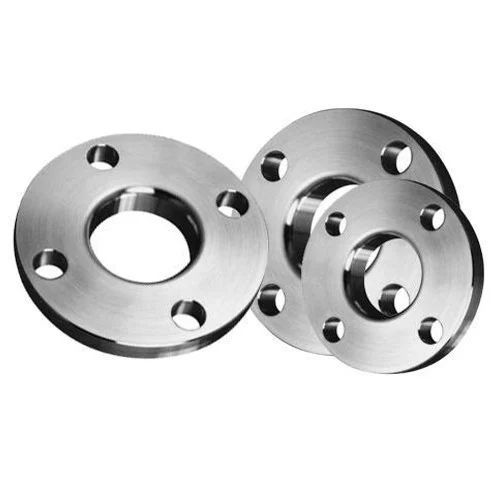
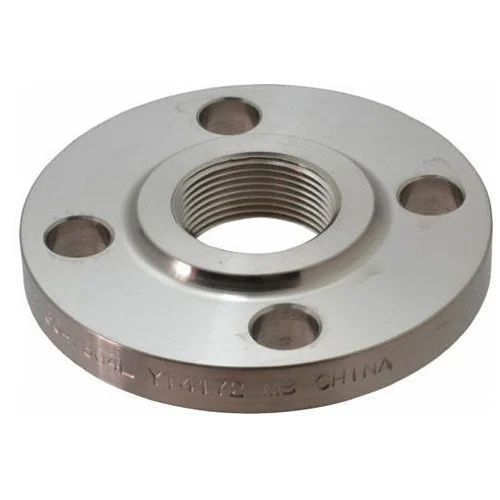
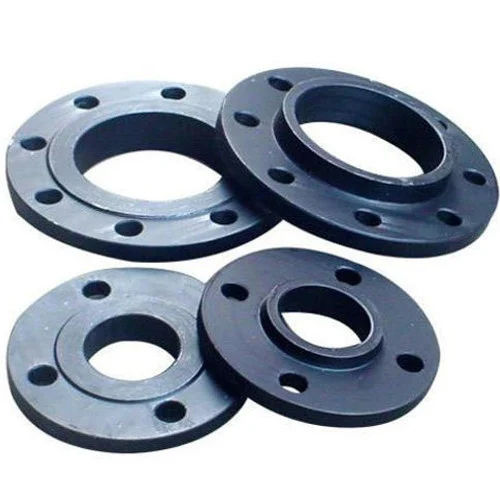
About Lap Joint Flanges
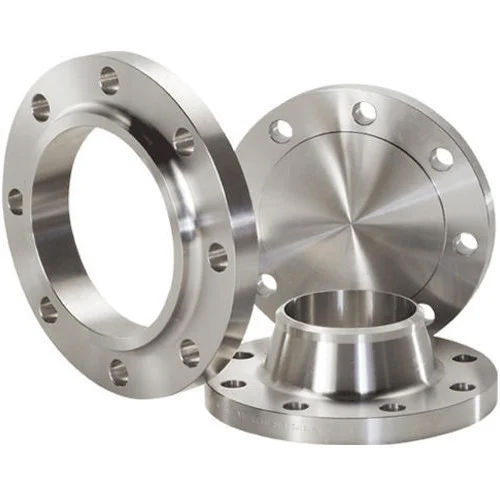
These stainless steel flanges are fillet welded to a position and are ideal for low-pressure applications. Blind Flanges: The flanges are designed without a bore, and are used to seal vessel openings or piping systems. These flanges are ideal for piping systems or vessels that require regular inspection.
Versatile Connection SolutionsLap Joint Flanges offer flexible connection options for various pipeline systems. Their compatibility with diverse face types and industry standards ensures seamless integration in pipelines for corrosive and high-pressure environments. The polished, round design, along with standardized dimensions, allows for easy assembly and effective maintenance.
Superior Durability and ResistanceForged from premium stainless steel grades, these flanges exhibit exceptional durability, corrosion resistance, and mechanical strength. They withstand demanding operational temperatures and pressures, making them reliable for continuous industrial use. Smooth, matte finish contributes to their high purity and resilience in harsh environments.
Compliant and CustomizableAvailable in multiple standards such as ANSI, DIN, JIS, BS, EN, and IS, Lap Joint Flanges can be customized to meet project-specific requirements. Their dimensions, shapes, and pressure ratings align with strict industry norms, ensuring safety and longevity. Packing options like wooden cases or pallets ensure secure delivery and storage.
FAQ's of Lap Joint Flanges:
Q: How are the face types (RF, FF, RTJ) of Lap Joint Flanges selected for pipelines?
A: The face types of Lap Joint Flanges-Raised Face (RF), Flat Face (FF), and Ring Type Joint (RTJ)-are chosen based on pipeline application requirements, compatibility with gaskets, and desired sealing performance. RF and FF are ideal for general usage, while RTJ is preferred for high-pressure and critical sealing situations.
Q: What industries commonly use these stainless steel Lap Joint Flanges?
A: These flanges are widely utilized in oil & gas, chemical processing, water treatment, and other pipeline-intensive industries due to their corrosion resistance, high strength, and compliance with multiple international standards such as ANSI, DIN, JIS, BS, EN, and IS.
Q: When should Lap Joint Flanges with high temperature and pressure ratings be employed?
A: Lap Joint Flanges rated for temperatures from -20C to 600C and pressures up to 2500# are suitable for demanding environments where thermal and mechanical stress are prevalent, ensuring pipeline safety during continual operations and extreme conditions.
Q: Where are the Lap Joint Flanges typically installed within a pipeline system?
A: Lap Joint Flanges are typically installed at points requiring frequent dismantling for inspection, cleaning, or replacement without disturbing the pipe alignment. Their round shape and standardized bolt holes facilitate quick assembly and disassembly in both horizontal and vertical pipeline sections.
Q: What is the process for manufacturing these flanges and how does it enhance performance?
A: Manufactured using advanced forging techniques, these flanges achieve superior mechanical properties, uniform thickness as per ASME/ANSI standards, and enhanced corrosion resistance. The polished and matte finish further improves purity, longevity, and operational reliability.
Q: How does the standardized bolt hole pattern benefit installation and usage?
A: Standardized bolt holes, as per flange dimensions, ensure compatibility with corresponding pipes and bolts, simplifying assembly and reducing installation time while maintaining a secure and leak-proof joint.
Q: What are the main benefits of choosing Lap Joint Flanges from Indian manufacturers and suppliers?
A: Indian manufacturers and suppliers offer flanges in a variety of sizes, grades, and standards, provide customization, and deliver secure packing options like wooden cases or pallets. Their commitment to quality and international norms ensures reliable product performance and easy procurement for global projects.





 Send Inquiry


 Send Inquiry